
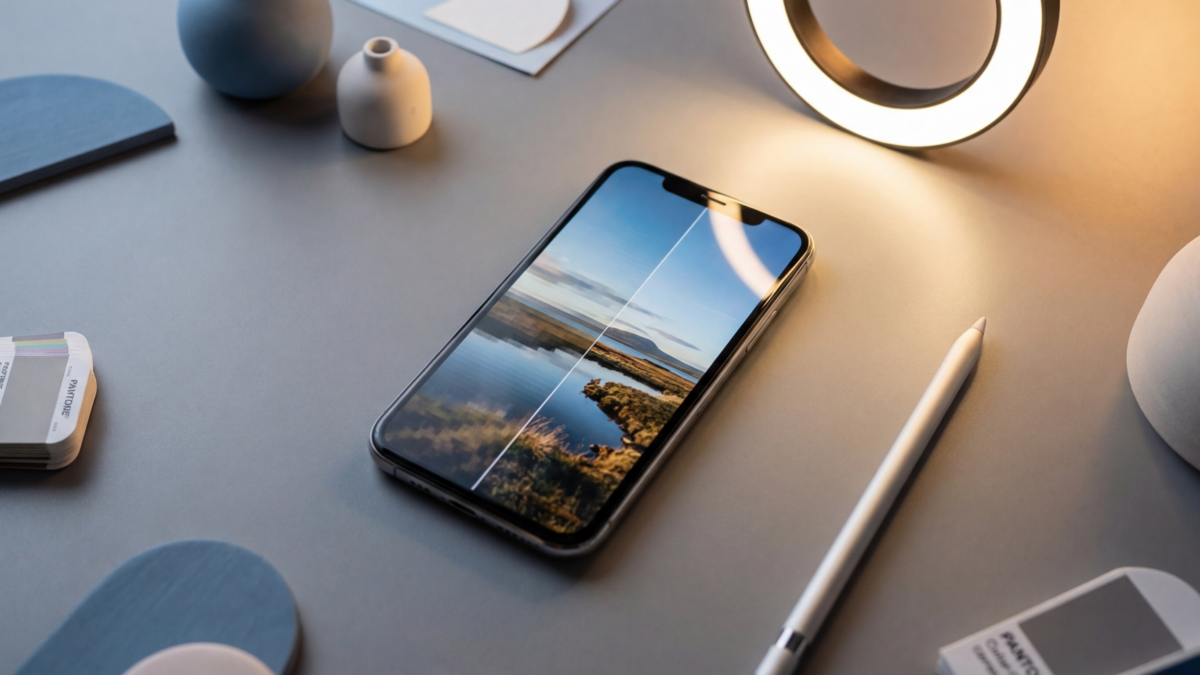
Before-and-after ads are the single most effective creative format for AI photo and beauty apps, and it is not close.
According to AppsFlyer's State of App Marketing report, photo and video apps saw a 26% increase in non-organic installs in 2025, and much of that growth was fueled by transformation-focused creatives that instantly demonstrate value.
In our experience managing AI photo app campaigns, before-and-after ads consistently deliver meaningfully lower CPI and higher click-through rates compared to feature-walkthrough or lifestyle creatives.
In this guide, you will learn exactly how to plan, produce, and optimize before-and-after ads for apps like Remini, Glam AI, Reface, Lensa, and similar products, covering transformation selection, image sourcing, platform compliance, and testing methodology.
Prerequisites: Before diving in, you need: (1) A live app with a clear visual transformation feature (enhancement, style transfer, aging, beautification, background swap, etc.). (2) Access to at least one major ad platform (Meta Ads, TikTok Ads, Google Ads, or Apple Search Ads for branded defense).
(3) A basic creative production pipeline, even if it is just one designer with Figma and CapCut. (4) An MMP configured for post-install event tracking (trial starts, subscriptions, or purchases), since optimizing before-and-after ads on installs alone will waste significant budget.
According to AppsFlyer’s eCommerce App Marketing report, apps that optimize on down-funnel events see 40-60% better ROAS than those optimizing on installs. (5) Familiarity with the fundamentals of mobile user acquisition, including campaign structure, bidding, and measurement basics.
Page Contents
Step 1: Why do before-and-after ads outperform every other format for AI photo apps?
Before-and-after ads work because they compress the entire user value proposition into a single glance, eliminating the need for explanation. According to data.ai's 2025 State of Mobile report, the average user spends less than 1.7 seconds deciding whether to engage with an in-feed ad.
The before-and-after format communicates product value in under 0.5 seconds because it leverages a hardwired cognitive pattern: comparison. The human visual system is optimized for detecting differences between two adjacent images, which is why split-screen and side-by-side formats generate involuntary attention.
For AI photo apps specifically, the transformation IS the product. You do not need to explain what the app does, show testimonials, or walk through features.
You show the before, you show the after, and the viewer's brain fills in the gap with desire. In our experience managing AI photo and beauty app campaigns, before-and-after ads consistently outperform feature demos on CTR and deliver lower CPI than UGC testimonial formats across both Meta and TikTok.
According to Sensor Tower data from Q1 2025, photo and video apps collectively generated $2.1B in global consumer spend, with the top grossing apps in the category all using before-and-after as their primary paid creative format.
In our experience, the single highest-performing before-and-after variant across AI photo app campaigns is the 'swipe reveal' on TikTok and Reels, where a finger swipe or slider divides the before and after. This format tends to drive substantially higher completion rates than static split-screen.
Step 2: How do you choose the right transformation to feature in your ad?
Start with your app's highest-retention feature, not its most impressive one. The transformation you advertise should match the feature that drives the most Day 7 retention or subscription conversions, because a misleading before-and-after that sets false expectations will tank your ROAS even if it drives cheap installs.
Pull your product analytics and identify which feature has the highest: (1) usage frequency among subscribers, (2) correlation with trial-to-paid conversion, and (3) visual legibility (can you see the difference in a 1080×1080 thumbnail?). For a Remini-style app, that might be photo unblurring.
For a Glam AI-style app, it might be the full-face glamour filter rather than subtle skin smoothing. The key constraint is that the transformation must be visible at mobile scale.
In our experience testing before-and-after creatives for AI photo apps, transformation types that tend to drive the strongest CTR are those where the change is immediately legible at mobile scale: old or damaged photo restoration, blurry-to-sharp enhancement, and age transformation consistently rank among the top performers, while subtle retouching tends to rank at the bottom.
The top performers all share a trait: the transformation is dramatic enough to read instantly on a small screen.
How many transformations should you show in one ad?
For video ads (15-30 seconds), show 3-5 transformations in quick succession. This creates a highlight reel effect that increases perceived app value and lets different viewers find a transformation that resonates. For static ads, a single powerful transformation outperforms multi-image layouts because visual clarity wins in the feed.
For carousel ads on Meta, use 4-6 cards each showing a different transformation type. In our experience, carousel before-and-after ads on Meta frequently outperform single-image before-and-after ads on CPA because each card acts as its own hook for different audience segments.
Run a quick audit of your top 3 competitors' ad libraries on the Meta Ad Library and TikTok Creative Center. Ads running for 30+ days are almost certainly profitable and worth benchmarking against.
Step 3: How do you source and select the right 'before' images?
The 'before' image is more important than the 'after' because it determines whether the viewer stops scrolling. Your 'before' must be relatable enough that viewers see themselves in it, but imperfect enough that the transformation is dramatic.
Too polished a 'before' makes the transformation unimpressive; too low-quality a 'before' looks fake. Common patterns across AI photo app creative testing show that the optimal ‘before’ image looks like a casual selfie taken in mediocre lighting with visible but not extreme imperfections.
In our experience across AI photo and beauty app campaigns, UGC-style images (or actual user-submitted content with permission) consistently outperform stock photos on CTR because they feel authentic. Stock photos trigger ad blindness.
AI-generated faces are a viable middle ground but carry compliance risks: according to Meta's AI content transparency policies, misleading before-and-after imagery can result in ad disapproval or account restrictions. The safest approach is sourcing real photos: hire diverse models for a shoot focused on deliberately imperfect 'before' shots, then run those through your app for authentic 'after' results.
What demographics and face types should your 'before' images represent?
Diversity is a performance lever, not just an ethical choice.
In our experience across AI photo app campaigns, ad sets using a wider range of distinct demographic profiles in their before-and-after images tend to achieve higher install rates than those using only one or two profiles, because the algorithm can find more pockets of responsive audience.
This aligns with what we describe in our guide to high-performing mobile ads as addressing distinct audience segments within the same campaign. Source before images across age groups (20s, 30s, 40s, 50s+), genders, skin tones, and face shapes.
Each variant lets the platform's algorithm serve the most relevant transformation to each user.
Never use a 'before' image that looks artificially degraded. Users can instantly detect when a photo has been deliberately blurred or worsened. In our experience, creatives with artificially degraded 'before' images attract significantly more negative comments and higher hide rates on Meta, which tanks delivery.
Step 4: How do you produce the 'after' image for maximum impact?
Need help scaling your mobile app growth? Talk to RocketShip HQ about how we apply these strategies for apps spending $50K+/month on UA.
The 'after' image must be impressive but believable. Always generate the 'after' using your actual app, then make only minimal production adjustments (framing, color balance for ad format consistency). Never manually enhance the 'after' beyond what the app produces. This is both a compliance requirement and a performance strategy.
If the 'after' overpromises, you will see high install rates but disastrous trial-to-paid conversion (sub-5% vs. a healthy 15-25% for well-calibrated AI photo apps, per RevenueCat's State of Subscription Apps 2025).
The golden rule for before-and-after ads: the ‘after’ should look like the best possible version of the ‘before’ person, not a different person.
In our experience, creatives where the 'after' is clearly recognizable as the same individual achieve meaningfully higher downstream conversion rates (trial starts and subscriptions) because user expectations are set correctly.
Run the same 'before' photo through your app 3-5 times and select the best output. AI models produce variable results, and cherry-picking the strongest output for ad creative is standard practice that does not cross the line into misrepresentation.
Step 5: What ad formats and layouts work best for before-and-after creatives?
The layout you choose is platform-dependent and has a significant impact on performance. Based on RocketShip HQ client data, here are the top-performing formats by platform. On TikTok, the swipe-reveal video format (9:16, 15-20 seconds) delivers the highest completion rates.
On Meta feed, the side-by-side static image (1:1 or 4:5 ratio with a clear dividing line and 'Before/After' labels) is the most reliable performer. On Meta Reels, a quick-cut montage showing 3-4 transformations in under 15 seconds works best.
On Google UAC, the system auto-crops aggressively, so use a 1:1 ratio with large, centered faces and bold text labels to survive cropping. Every layout should include a clear visual hierarchy: the 'before' and 'after' states must be instantly distinguishable even at thumbnail size.
How do you handle text overlays and CTAs on before-and-after ads?
Keep text minimal. The transformation does the selling. In our experience, before-and-after creatives with more than 8 words of text overlay tend to underperform those with 3-5 words on CTR — visual clarity consistently beats text density. This principle applies across formats—whether you’re producing short-form video ads for mobile apps or static creatives, visual clarity beats text density.
The most effective text strategy is: label 'Before' and 'After' clearly, add the app name, and include one short benefit phrase ('Restore old photos in seconds'). Place CTAs within the first 3 seconds for video or in the bottom third for static. Avoid cluttering the transformation area with text.
Step 6: How do you navigate platform compliance for before-and-after ads?
Compliance is the number one scaling bottleneck for before-and-after ads, and ignoring it will cost you entire ad accounts. According to Meta's advertising policies, ads must not contain before-and-after images or set unrealistic expectations about product results, particularly for health and appearance claims.
However, in practice, AI photo transformation ads are approved at high rates when they follow specific guidelines. The key is framing the ad as a technology demonstration rather than a personal improvement promise. Show what the app does to a photo, not what it does to a person.
Avoid language like 'fix your face' or 'become beautiful.' Instead use 'enhance photo quality' or 'try this AI filter.' On TikTok, compliance is slightly looser for entertainment-framed transformations but stricter for anything positioned as beauty enhancement. In our experience, the approval rate gap between compliant and non-compliant before-and-after ads on Meta is stark — technology-framed ads that follow platform guidelines are approved at dramatically higher rates than those making personal improvement claims.
What specific words and claims should you avoid?
Avoid any language implying personal inadequacy ('fix,' 'correct,' 'improve your appearance') or guaranteeing results ('always,' 'guaranteed,' 'perfect'). According to TikTok's advertising policies on ad creatives, ads must not make exaggerated or false claims.
Safe language includes: 'See what AI can do,' 'Transform any photo,' 'Try the filter everyone is using.' Frame the transformation as fun or technological rather than corrective. In our experience, ads using 'fun' framing are rejected at a meaningfully lower rate than those using 'improvement' framing.
Always have 2-3 backup ad accounts warmed up and ready. Even fully compliant before-and-after ads get caught in automated policy sweeps. In our experience, a meaningful share of compliant before-and-after ads receive initial rejections that are overturned on appeal — so always contest automated disapprovals before assuming non-compliance.
Step 7: How should you structure campaigns and bidding for before-and-after creatives?
Set up campaigns optimizing on a post-install event (trial start or subscription), not on installs. Before-and-after ads are so effective at driving clicks and installs that optimizing on installs leads to massive volumes of low-quality users who never convert.
In our experience, switching from install optimization to trial-start optimization on Meta typically reduces raw install volume but meaningfully improves trial-start CPA and ROAS — the format’s visual power attracts high click volumes from low-intent users, making post-install event optimization mandatory rather than optional.
For campaign structure, use a consolidated approach: one campaign per platform with 3-5 ad sets segmented by creative concept (not audience targeting). Let the platform’s algorithm find the right audience for each before-and-after variant. This aligns with findings that creative variation drives performance impact in modern mobile UA.
On TikTok, according to our analysis of top paid UA channels, start with a $50-100/day budget per ad group and scale winners by 20% daily increments.
What bid strategy works best for before-and-after ad campaigns?
On Meta, use cost cap or bid cap tied to your target trial-start CPA. In our experience, cost cap outperforms lowest-cost bidding on ROAS for AI photo apps because it prevents the algorithm from chasing cheap, low-intent installs.
On TikTok, start with lowest cost to let the algorithm learn, then switch to cost cap after accumulating 50+ conversion events per ad group. Set your target CPA at 1.2-1.5x your breakeven CPA to give the algorithm enough room to optimize while maintaining profitability.
Step 8: How do you test before-and-after ad variations systematically?
Testing is where most teams fail. They find one before-and-after creative that works, run it until it fatigues, and then scramble.
The right approach is structured iteration with a 70/20/10 budget split: 70% on proven winners, 20% on variations of winners (new faces, different transformations, alternate layouts), and 10% on wild-card concepts. For teams managing hundreds of variants monthly, AI tools that scale creative production enable 4-6x output increases without proportional headcount growth.
Mobile apps commonly see before-and-after creatives on Meta fatigue within 7-14 days of scaling (defined as a 30%+ increase in CPA from baseline). You need a pipeline producing 5-10 new before-and-after variations per week to maintain performance at scale.
As outlined in our guide on setting a mobile UA budget, allocating 15-20% of total UA spend to creative production and testing is the minimum for sustained growth.
What variables should you test first?
Test in this priority order based on impact potential: (1) The transformation type (highest impact, with the largest CPI variance across concepts). (2) The 'before' face/person (second highest, with significant CPI variance). (3) The layout/format (side-by-side vs. slider vs. video reveal). (4) Text overlay copy (typically the lowest-variance element).
Transformation type selection is a critical driver of performance variance across mobile campaigns. This echoes broader research showing that creative quality drives 3-4x more performance variance than audience targeting or bid strategy in mobile advertising.
When a before-and-after creative wins, extract the exact transformation, face type, and layout as a 'creative brief template' and produce 5-8 variations of it immediately. In our experience, the first round of winner-based iterations maintains strong performance relative to the original while meaningfully extending the concept's lifespan.
Step 9: How do you measure the true performance of before-and-after ads beyond installs?
Installs are a vanity metric for before-and-after ads because the format drives high click and install volumes almost by default. The metrics that matter are trial start rate, trial-to-paid conversion, and Day 7 or Day 30 ROAS.
Configure your MMP (Adjust, AppsFlyer, or Branch) to pass these events back to your ad platforms for optimization.
For a well-performing before-and-after ad campaign on an AI photo subscription app, industry patterns suggest targeting a trial start rate in the 25-35% range, with trial-to-paid conversion benchmarks available from sources such as RevenueCat's 2025 benchmarks.
If your trial start rate drops below 15%, the creative is likely overpromising. As detailed in Adjust's State of App Growth report, measuring reattribution and re-engagement alongside new user acquisition is critical for apps with high organic overlap.
Build a creative-level performance dashboard that maps each specific before-and-after variant to its downstream conversion metrics. This lets you identify which transformation types and face demographics produce paying subscribers, not just installers.
Step 10: How do you scale winning before-and-after creatives without burning them out?
Scaling too fast kills creative performance. The rule is to increase spend by no more than 20% per day on a winning ad set, and to broaden distribution across platforms and placements before increasing budget on a single one.
Based on RocketShip HQ client data, a before-and-after creative that works on Meta feed will typically also perform well on Instagram Reels, TikTok ads for app growth, and Snapchat with minor format adaptations (aspect ratio, text placement, video pacing). In our experience, cross-platform apps can achieve meaningfully lower CPIs on TikTok compared to more saturated UA channels.
Cross-platform replication is the fastest way to scale a winner without accelerating fatigue on any single platform. When a creative is producing strong ROAS on Meta, immediately adapt it for TikTok (make it feel more native, add trending audio) and for Google UAC (ensure it survives auto-cropping).
According to AppsFlyer's Performance Index, diversifying spend across multiple ad networks helps reduce CPA volatility for photo and video apps.
Maintain a 'creative bench' of 3-5 tested-and-proven before-and-after creatives that are paused but ready to reactivate. When your current winners fatigue, rotating in rested creatives often restores a significant portion of original performance — in our experience, this is one of the most reliable scaling levers available.
Common Mistakes to Avoid
- Optimizing on installs instead of downstream events. Before-and-after ads are so visually compelling that they drive massive install volumes, but a large share of those installs may never start a trial if the campaign is optimized for volume rather than quality. Always optimize on trial starts or subscriptions.
- Using artificially degraded 'before' images. Deliberately blurring or worsening a photo to make the transformation look more dramatic backfires. In our experience, these creatives generate more negative reactions on Meta, which reduces delivery score and inflates CPM.
- Showing transformations your app cannot replicate. If the 'after' in your ad was manually enhanced beyond what the app produces, users will uninstall immediately after trying the feature. Creative-to-product mismatches commonly cause Day 1 retention to decline significantly compared to well-matched creatives. 35-45% for well-matched creatives).
- Running one creative until it dies. According to our guide on building mobile growth teams, creative production velocity is the top predictor of UA team performance. A single before-and-after creative typically fatigues quickly at scale. Teams need a pipeline of 5-10 new variations per week.
- Ignoring platform compliance nuance. Framing a before-and-after as 'fix yourself' instead of 'try this AI technology' can get your ad rejected or your account flagged. In our experience, ads using improvement framing get rejected at a substantially higher rate than technology-framing ads on Meta.
- Using only one face type across all creatives. Single-demographic ad sets commonly achieve fewer installs per dollar than diverse sets because the algorithm has fewer audience segments to explore.
- Scaling budget too fast on winners. Increasing daily spend by more than 20-30% on a winning ad set typically triggers re-learning and CPA spikes. According to Meta's own documentation on the learning phase, significant budget changes reset optimization and can increase CPA by 20-50% during the re-learning period.
Before-and-after ads are the dominant creative format for AI photo and beauty apps because they communicate value instantly, drive high engagement, and convert efficiently when produced and optimized correctly.
The keys to success are: choosing transformations that match your highest-converting feature, sourcing diverse and authentic ‘before’ images, producing ‘after’ images directly from your app without manual enhancement, navigating compliance by framing transformations as technology rather than personal improvement, and testing relentlessly with a structured pipeline. For teams scaling beyond manual testing, dynamic creative optimization frameworks enable structured testing of 10+ image variants simultaneously.
Start by producing 5-8 before-and-after variants across your top 2-3 transformation types, launch them on Meta and TikTok optimized for trial starts, and establish your creative performance baseline within 2 weeks. Understanding best ad formats for mobile apps helps you choose between short-form video and static creatives based on your specific app category and audience. From there, iterate weekly on your winners using the 70/20/10 budget framework.
If you need help scaling creative production or managing UA for an AI photo app, RocketShip HQ has managed campaigns for dozens of apps in this category and can accelerate your path to profitability.
Frequently Asked Questions
How long does it take for a before-and-after ad to exit the learning phase?
On Meta, plan for 3-7 days or approximately 50 optimization events (whichever comes first) according to Meta's own learning phase documentation. On TikTok, the learning phase typically requires 50 conversion events per ad group. Before-and-after ads exit learning faster than other formats because their high CTR accelerates event accumulation.
Can before-and-after ads work for AI photo apps outside of English-speaking markets?
Yes, and often better. The format is almost entirely visual, which means it transcends language barriers. Based on data from AI photo app campaigns in Southeast Asia and Latin America, before-and-after creatives tend to achieve meaningfully lower CPIs than in the US or UK with comparable trial start rates.
According to AppsFlyer’s benchmarks, emerging markets are showing the fastest growth in non-organic installs for photo apps.
What is the ideal video length for a before-and-after ad on TikTok vs. Meta Reels?
On TikTok, 12-18 seconds is the widely recommended duration for transformation ads, with the reveal happening in the first 3 seconds to hook viewers — a guideline consistent with TikTok’s own Creative Center best practices. On Meta Reels, 15-22 seconds is the sweet spot. Both platforms reward high completion rates, so shorter is generally better.
In our experience, videos over 30 seconds tend to see meaningful completion rate drop-off compared to sub-20-second cuts, which is consistent with both platforms' emphasis on rewarding shorter, high-retention content.
Should I use the same before-and-after creatives for retargeting campaigns?
No. Retargeting audiences have already seen your transformation promise, so showing the same before-and-after reduces impact. In our experience, retargeting campaigns for AI photo apps tend to perform meaningfully better when they use 'deeper' creatives: screen recordings of the app in action, user testimonials about results, or comparisons to competitor apps. Save your before-and-after creatives for cold prospecting.
How do seasonal trends affect before-and-after ad performance for photo apps?
Seasonality is significant. Industry patterns suggest AI photo app CPIs tend to drop during holiday periods (Christmas, Valentine's Day, Mother's Day, graduation season) because users are actively seeking photo enhancement for gifts and social sharing.
The best transformation types shift seasonally too: old photo restoration spikes around Mother's Day and Thanksgiving, while beauty and glamour filters peak before New Year's Eve and prom season.
Do before-and-after ads work on Apple Search Ads?
Apple Search Ads do not support before-and-after creative formats directly since ad creatives are auto-generated from your App Store listing. However, you can optimize your App Store screenshots to feature before-and-after comparisons, which then serve as your ASA creative.
In our experience, apps with before-and-after screenshots in positions 1-2 tend to see higher conversion rates on branded and category search terms compared to feature-focused screenshots.
What budget do I need to meaningfully test before-and-after ads?
For an initial 2-week test cycle covering 5-8 creative variations, you'll need enough budget per platform to exit the learning phase and accumulate statistically significant data — the right figure varies by vertical and target CPI, so we recommend working backward from your target cost-per-event. This budget is enough to exit the learning phase on Meta and accumulate statistically significant data across variations.
As we outline in our UA budgeting guide, you need roughly 50 conversion events per creative variant to make reliable performance decisions.
Should I hire an agency or handle before-and-after ad production in-house?
It depends on your creative velocity needs. If you need 5-10 new variations per week to sustain scaling (which most apps at $50K+/month spend do), an agency with established production pipelines will outperform a solo in-house designer.
At RocketShip HQ, we produce hundreds of before-and-after variants monthly across AI photo app clients. For early-stage apps spending under $20K/month, an in-house designer using templates can manage the volume.
Looking to scale your mobile app growth with performance creative that delivers results? Talk to RocketShip HQ to learn how our frameworks can work for your app.
Not ready yet? Get strategies and tips from the leading edge of mobile growth in a generative AI world: subscribe to our newsletter.
Related Reading
- The complete guide to mobile user acquisition (comprehensive guide)
- Adjust State of App Growth Report: Global Trends and Benchmarks (2026)
- AppsFlyer State of eCommerce App Marketing Report: UA and Retention Benchmarks (2026)
- AppsFlyer Performance Index: Top Ad Networks Ranked for Mobile Apps (2026)
- AppsFlyer State of App Marketing Report: Key Trends and Benchmarks (2026)
