The single biggest lever on TikTok for mobile apps is creative, not targeting or bidding. Ads that win on TikTok look like content a real person made, not a polished commercial: shot on a phone, sound-on, quick cuts, native text and stickers. They earn the scroll in the first three seconds with a clear hook, then hold attention with a script that moves from setup to payoff. This guide lays out the frameworks we use to build that creative, grounded in our hook system and TikTok-native production playbook.
This is a craft guide, not a benchmark report. We deliberately avoid quoting CPI, ROAS, or install-rate figures here, because those numbers depend entirely on your app, category, geography, and offer. What travels across accounts is the creative method. For the channel-agnostic version of this thinking, see our mobile ad creative strategy guide.
Page Contents
Why does creative matter more on TikTok than the campaign settings?
TikTok is a discovery feed. Users open it to be entertained, and the algorithm distributes content based on engagement signals more than on upfront audience definitions. That changes where your effort should go.
An ad that looks like an ad gets skipped. An ad that feels native to the feed gets watched, and watch time is the signal the system reads. So the work shifts from configuring targeting to making creative that genuinely belongs on the platform. The rest of this guide is about how to do that.
What makes a TikTok hook actually work?
The hook is the first three seconds: the window where a viewer decides to keep watching or scroll. Every strong hook satisfies three conditions at once. We call it the 3C Principle.
| Context | Who is this for, what problem space? The brain has to categorize the video instantly, or it scrolls. |
| Clarity | What is this about, and why is it worth watching? Precision keeps people in. |
| Curiosity | An open loop. Tension, a contrarian angle, an implied mistake, or an unresolved outcome. No open loop, no reason to stay. |
Hooks also operate on four layers at the same time. The strongest creative stacks them intentionally rather than leaning on one.
- Visual: stops the scroll. How do you interrupt the feed?
- Text: orients the viewer. What is this, why care?
- Verbal: builds connection. What is the story or argument?
- Audio: amplifies emotion. What should the viewer feel?
For a deeper look at hook archetypes, see our breakdown of four types of ad hooks that work.
How do you build a visual hook?
The visual hook is the first subconscious interrupt. It does not need to be cinematic, it needs to be noticeable. Instead of asking “what looks good?”, ask “how do I interrupt the feed?” Five techniques, which compound when combined:
- Dynamic movement. A sudden camera zoom (roughly 0.3 to 0.8 seconds), a quick push-in, or fast hand motion turns a static shot into a pattern break.
- Color and contrast. Feeds are visually similar. A saturation or brightness boost, strong light-dark contrast, or one bold color element makes the frame stand out.
- Context-rich objects. Items that carry built-in meaning (a phone showing a dashboard, money, a receipt, a premium object) communicate the story in one to two seconds.
- Unexpected imagery. Visual confusion that makes a viewer think “what is happening?” Follow it immediately with clarity through text or voice.
- The multiplier. Zoom-in plus high contrast plus a curiosity object plus an audio cue is a high-interruption opening.
Build two or three visual-hook options per concept so the editor can test: a safe version that matches the script, a higher-contrast or more dynamic alternative, and optionally an unexpected pattern-break version. More on this in what makes a good video ad for mobile apps.
What should the text overlay and audio do?
The on-screen text overlay appears on the first frame and opens its own curiosity gap, separate from the spoken hook. Keep it short enough to read in a second or two, withhold the key fact, and do not reveal the product name (that closes the loop and removes the reason to keep watching). Use native platform fonts so it reads as organic, not as an ad.
Audio is a creative element, not an afterthought, because TikTok is a sound-on platform. The job of audio is to increase the emotion already in the first three seconds. Match the sound to the feeling you want:
| Tension | Subtle riser |
| Authority | Strong, clear vocal tone |
| Energy | Upbeat music |
| Reward or money | Notification or alert sound |
| Contrast | A sudden cut to silence |
One rule overrides all of this: never let music overpower the dialogue. If speech is unclear, attention drops immediately.
How do you write the script after the hook?
The hook earns the watch. The script keeps it and persuades. A clean structure moves through four beats:
- Setup: the situation, problem, desire, or discovery moment that opens the ad.
- Shift: what changes once the app or method appears.
- Proof: a concrete screen, behavior, or result that makes the promise believable. Show the actual interface.
- Payoff: what the viewer should remember or do next.
For the spoken hook line itself, a reliable shape is: audience, plus problem or desire, plus an unexpected angle, plus an implied outcome. Start immediately (no “hey guys”), keep the tone conversational and first-person, and read every script out loud before shooting. If a sentence sounds like writing being read aloud rather than a person talking, rewrite it. Aim for something that runs naturally in about 20 to 25 seconds.
How do you make ads look genuinely TikTok-native?
Native means it mirrors organic TikTok in style and pacing: creator-style over studio-polished. The production choices below are what sell that.
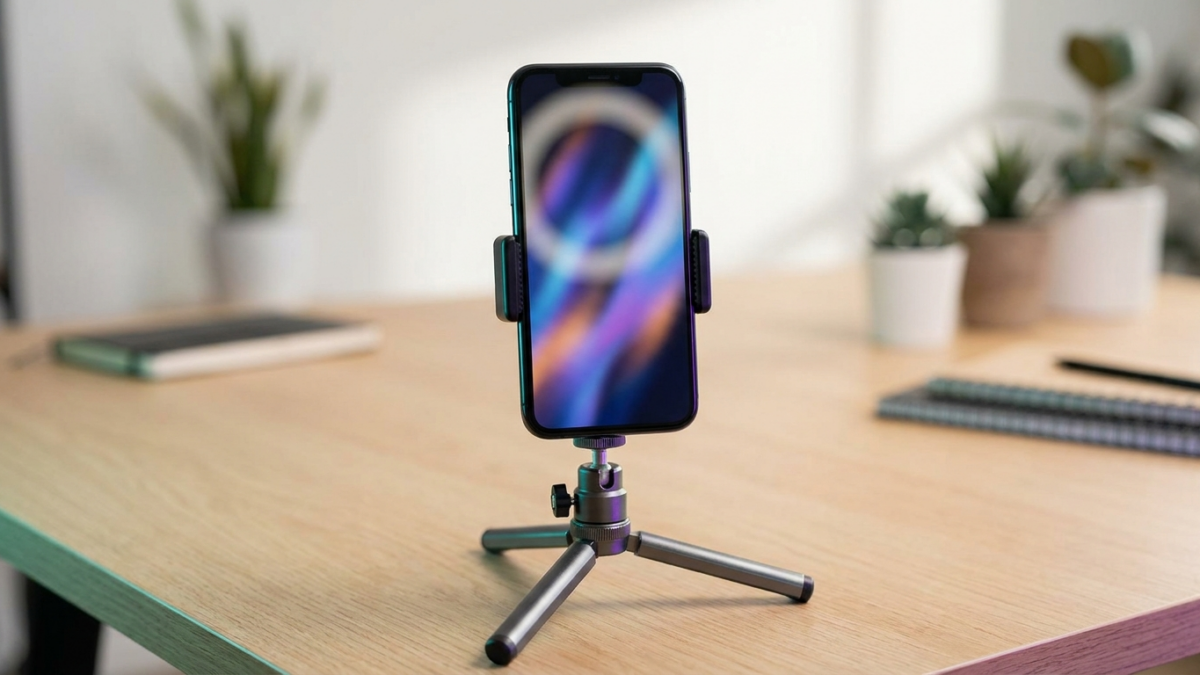
- Shoot vertical, on a phone. Use 9:16 portrait at 1080×1920 so the frame fills the feed and clears the platform safe zones for captions and UI buttons.
- Use quick cuts. Cut each line of dialogue into its own clip and stitch them, asking creators for multiple takes. Abrupt, obvious cuts read as native, not as a single polished take.
- Layer native elements. Text overlays, stickers, and emojis add context and energy and signal that this is platform content.
- Green-screen the walkthrough. Have the creator shoot against a green screen, then drop in the app walkthrough or screen behind them so the product is visible while the person talks.
- Keep audio clean. A quiet room, no reverb, a music bed running low under the voice so silent gaps are covered.
- End on a high. The strongest creatives close on a win state: the desired outcome achieved, reinforced by music and an end card.
Direction matters more than budget here. Ask creators to look into the camera, move their hands and head naturally, and memorize the lines rather than reading off a teleprompter, which is what separates content that feels real from content that feels staged.
Related reading
- The 4-Layer Hook System for Mobile App Ads
- Ad hooks that stop the scroll: a framework for mobile app ads
- The 5 Visual Hook Techniques for Mobile App Ads
Frequently Asked Questions
How long do I have to hook a viewer on TikTok?
The first three seconds. Viewers typically decide whether to keep watching, click, or scroll within that window, so the visual, text, and verbal hook all need to land immediately. The next three seconds are about holding that attention before the body of the script begins.
Should TikTok ads be polished or rough?
Creator-style over polished. Native content (filmed on a phone, natural lighting, quick cuts, real delivery) tends to outperform studio-grade production on TikTok because it belongs in the feed instead of interrupting it. Polish is not the goal; feeling organic is.
How many creative variations should I make?
Treat hooks and visual hooks as variables, not final drafts. Write several hook options and two to three visual-hook options per concept so you can test, then iterate the winners by changing one element at a time: the hook, the overlay, the audio, the pacing, or the scene order.
Does the same creative work on Instagram Reels and YouTube Shorts?
Largely, yes. A 9:16 vertical video built for TikTok carries over to Reels and Shorts because they share the format and the sound-on, scroll-fast behavior. Mind each platform’s safe zones for on-screen text, and keep the hook front-loaded.
Methodology note: This guide is qualitative and based on our creative frameworks and production practice. It intentionally contains no performance benchmarks (CPI, ROAS, install rate, or spend figures); the only numbers cited are craft specifications such as aspect ratio, resolution, zoom duration, and the first-three-seconds hook window.