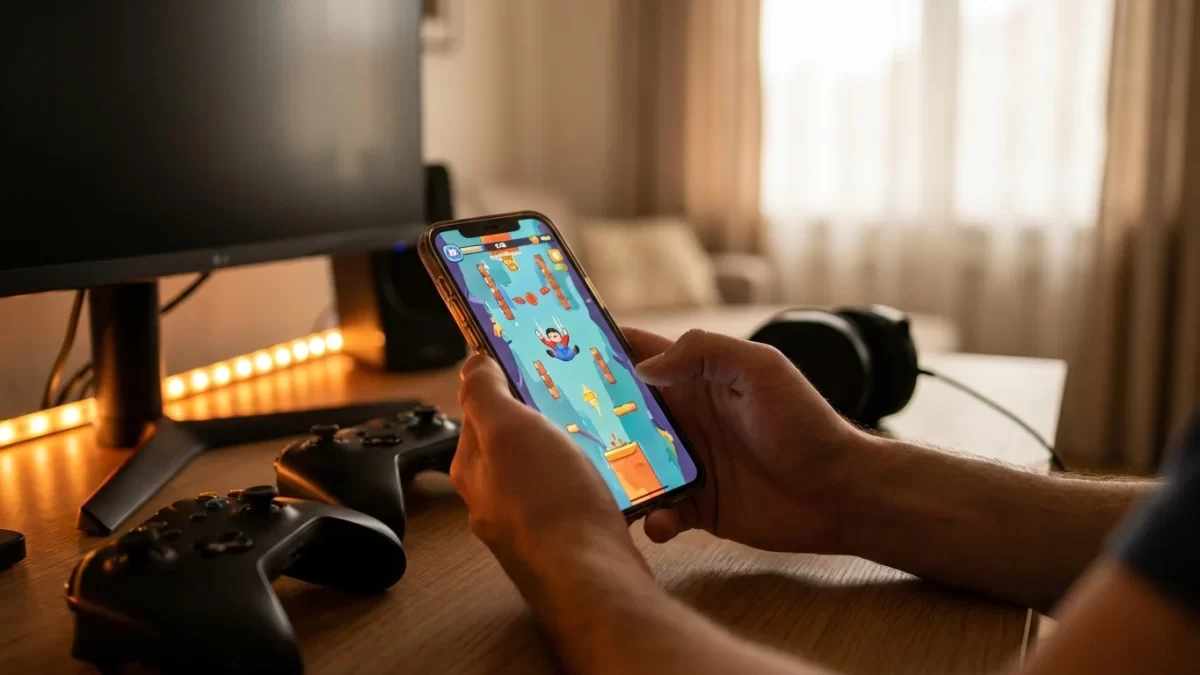
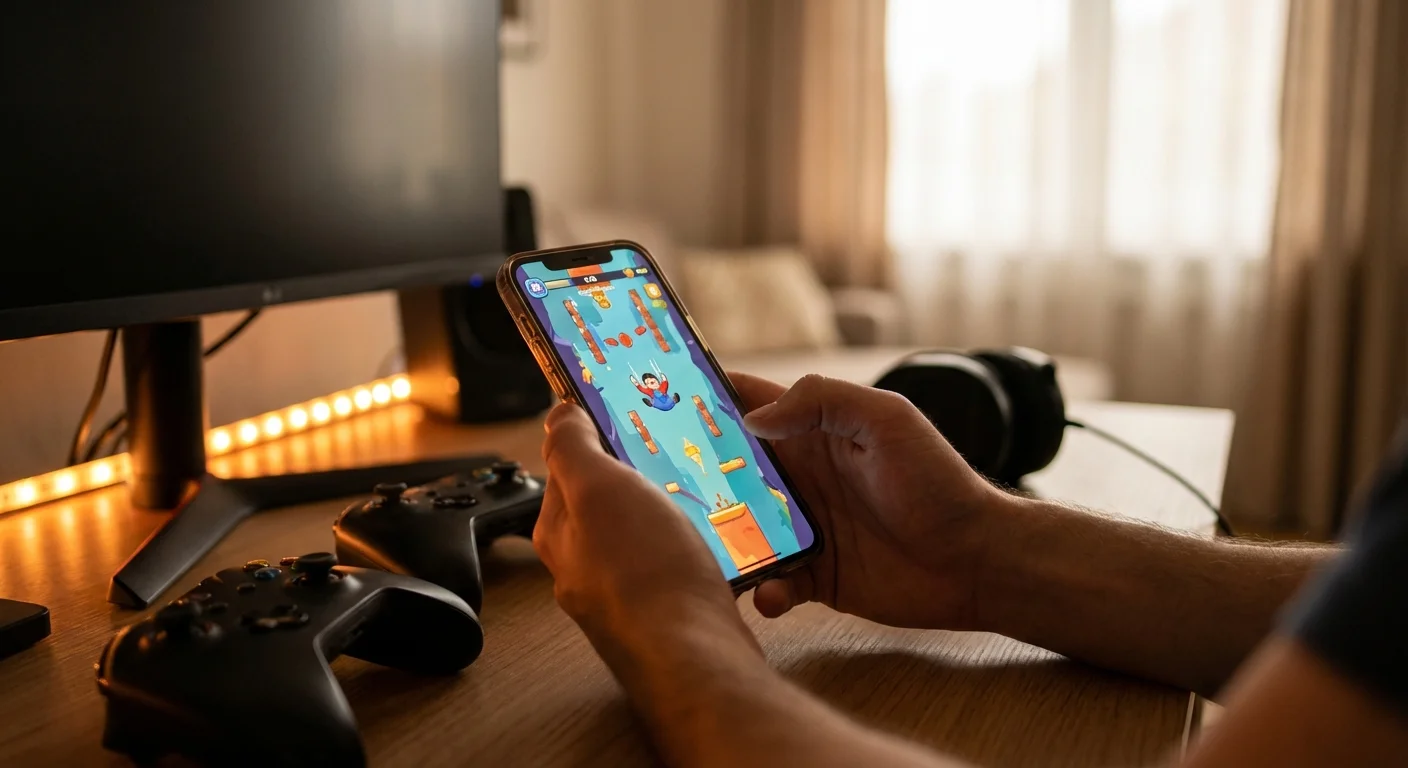
Fail ads consistently outperform traditional gameplay footage in mobile games, yet many app marketers still avoid them due to brand concerns. The secret isn't the failure, it's the psychological trigger that makes players desperate to prove themselves.
Page Contents
The Problem
Mobile game apps face declining organic install costs and rising competition for attention. Standard gameplay ads showcase winning moments, but they don't create urgency or emotional investment. Players scrolling through feeds see polished gameplay and think 'that looks hard' or 'I'd be bad at this,' leading to scroll-past behavior. Games need a different approach to drive action, especially in casual gaming categories where installation friction is high.
The Approach
Fail ads work by leveraging the Dunning-Kruger effect and competitive instinct. Instead of showing expert-level play, they intentionally showcase terrible decisions: missing obvious targets, taking damage from simple obstacles, or failing at straightforward mechanics. We frame this as a ‘can you do better’ challenge using simple copy like ‘beat this score’ or ‘I failed at level 3, can you?’ The psychology is direct: humans are competitive, and watching someone fail at an easy task triggers an immediate ‘I could do that’ response. In our experience testing this approach across casual gaming campaigns, varying failure severity, copy intensity, and character reactions, the optimal formula uses 2-3 second failure clips followed by 1 second of the user’s potential success state, with no voiceover. This creates cognitive dissonance (how can this be hard?) that drives clicks—a pattern consistent with broader findings that creative quality drives performance variance.
The Results
We’ve observed meaningful CTR improvements across hyper-casual games when switching from standard gameplay to fail ad creative. Cost per install can drop significantly on both iOS and Android within the first weeks of a campaign launch. However, the same fail ads that drive the highest install volume also tend to produce a noticeably higher 48-hour uninstall rate compared to standard ads, stabilizing after day 3. Games that used fail ads with strong onboarding showed meaningfully better day-7 retention, indicating that quality depends on expectation alignment. These CPI reductions align with patterns showing that reduce cpi with creative testing than those running limited creative rotations.
Key Takeaways
- Fail ads trigger competitive psychology, not confidence. Showing someone fail at an easy task creates a 'I can do better' response that is considerably more powerful than showing success. Use this for casual games and puzzle categories, not narrative-driven or skill-heavy titles where players want proof the game is accessible.
- Severity matters for post-install quality. Fail ads that are too extreme (complete incompetence, weird controls) drive installs but create buyer's remorse. The sweet spot is 'obvious mistake I could avoid,' not 'this game is broken.' Balance creative performance with retention by matching failure difficulty to actual game mechanics.
- Copy and timing are critical variables. A 2-3 second failure followed by 1 second of potential success without voiceover outperforms 5+ second fail sequences or ads with heavy commentary. In our experience, silent or minimal-text fails tend to outperform heavier copy treatments because viewers project their own competitive narrative onto the outcome. This timing precision mirrors best practices showing that video ad creative best practices in mobile video ads.
Fail ads are a high-ROI tactic for mobile game installs when used strategically. They work because they exploit human psychology, not because they’re ‘different.’ The risk is short-term install spikes paired with higher churn if game difficulty or onboarding doesn’t match the creative promise. Use fail ads for games with clear, simple mechanics and strong first-session experiences. Pair them with onboarding that immediately validates the ‘I can do better’ narrative by giving players early wins. Start with 20-30% of creative budget allocation and monitor D1 retention alongside CTR, not just install volume. To scale this approach systematically, build a creative testing roadmap and lower cost per install within 90 days.
Related Reading
- The complete guide to mobile user acquisition (comprehensive guide)
- How to Build a Mobile Growth Team
- The complete guide to mobile user acquisition
- What Is Mobile User Acquisition
Further Reading
- Why Early-Stage Apps Shouldn’t Diversify Their Ad Spend – Early-stage founders should concentrate ad budgets on one or two self-attributing networks (SANs) rather than spreadi…
- How to scale UA like a hypercasual game – Broad targeting keeps CPIs as low as $0.
- What’s working post ATT/iOS 14.5: 6 opportunities – Based on 15+ accounts: install-optimized campaigns show stronger downstream CPAs post-ATT.