
Unlock month on month growth for your consumer/subscription app
Our battle-tested post-identifier strategies and rock solid processes help you scale user acquisition for your consumer/subscription app, even in a post-identifier world.



Trusted by




























We’ve worked on:
100mm+
ad spend managed
10,000+
ads produced
100+
products grown

“In addition to being conscientious and accommodating, the RocketShip HQ team made our mission of spreading the hampr gospel far and wide THEIR mission. They worked tirelessly to refresh our ad creatives while meticulously strategizing ways to challenge our marketplace competitors.Their expertise and passion for success have helped us surpass our membership and conversion goals for the year. RocketShip has been more than just a partner, they've become an extension of our hampr family!”

“Rocketship HQ has been a great partner as we grow our digital acquisition in the midst of so much uncertainty around App Tracking Transparency. By implementing smart targeting and constantly testing and optimizing creative & messaging, we have been able to scale our spend and reach best-in-class efficiency metrics. Improving efficiency while significantly increasing spend almost never happens, yet here we are.”

“…helped bring some relentless discipline to not only help us truly understand our metrics and economics - but also eliminate a ton of inefficient spending.”


“ RocketShip HQ brought to the table nuance, understanding and speed that helped us unlock some massive growth in just a single city for us. They not only understood intricacies of mobile, but also turned around campaigns, channels and creatives very very quickly - helping us to scale aggressively in a hyper competitive market. We are excited to have them support our growth as we expand & grow from here on. ”


“ RocketShip HQ did everything it took to make some huge improvements in our CPAs - from testing an incredible variety of creatives and audiences to analyzing every nuance of our campaigns in depth. They not only tested a massive number of creatives but also did this systematically and methodically. Much of their work made light work of constraints like small audiences and limited budgets. We highly recommend their work”


“ RocketShip HQ get mobile user acquisition like no one else. They have an incredibly nuanced understanding of the complexities of the Facebook platform & the mobile app ecosystem - and they relentlessly iterated on our creatives, audiences and bids to drive our growth. They also truly grasp the dynamics of an early stage company like us - and understand what it takes to unlock massive growth”

Our results
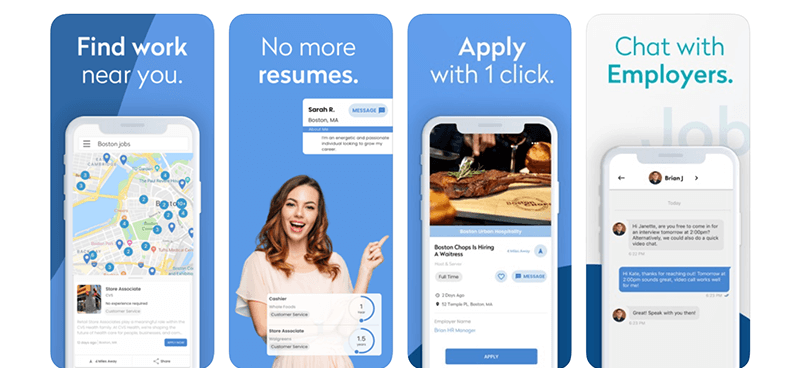
Accelerating the pace of growth of a lightning-fast job-search app
JobGet is a job-search app that helps service workers get jobs fast - sometimes as quickly as 24 to 48 hours. JobGet has been featured in leading publications such as Boston Business Journal, NPR, and MIT News among others. JobGet had run its growth primarily using influencers and social channels, and had begun testing paid ads. Their chief constraint was that they were operating only in Boston. How much growth could they achieve with systemic testing and optimization?
Scaling across the funnel in the midst of Apple's privacy policy changes
Parent Lab is an app that provides evidence-based solutions for everyday parenting challenges. It helps parents connect and grow with their children through insightful, research-based content.
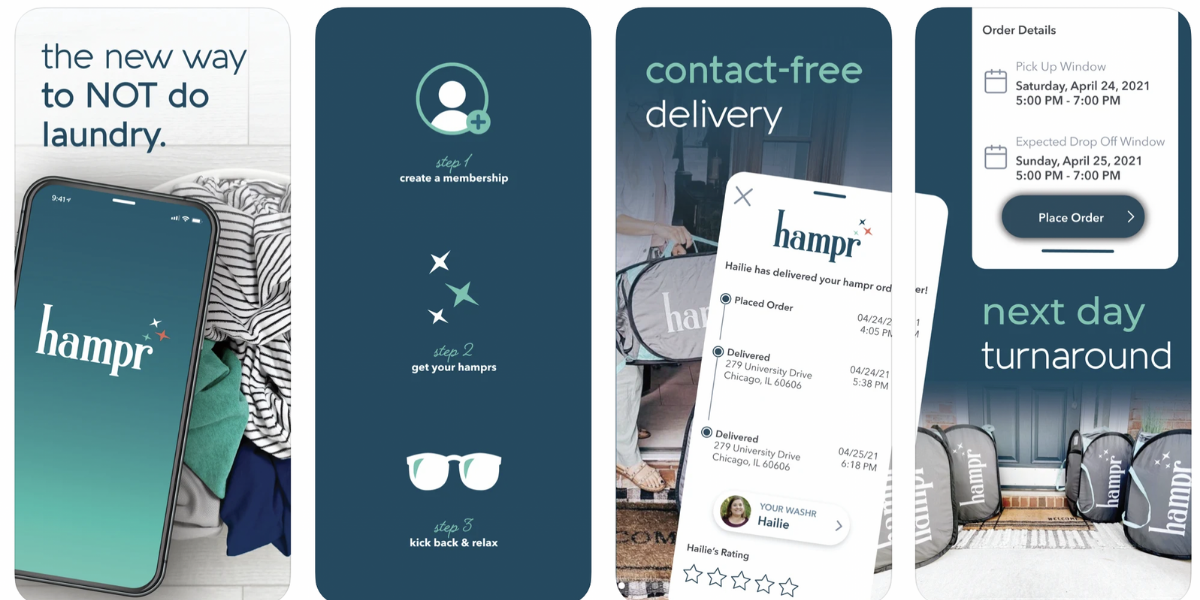
Unlocking month-on-month growth in the face of App Tracking Transparency headwinds
hampr is an on-demand platform where users can schedule wash-and-fold laundry services via the mobile app.
Our Secret Sauce

SKAN measurement & targeting

Creative process dialed into performance

Full funnel dashboards to win across the funnel

Omnichannel strategies to do whatever it takes
To request a free no-obligations consultation, please fill in the form below.
Please be as detailed as possible so we can help you better.
At this point we are only taking on advertisers with a minimum of $50,000 a month in ad spend for our fully managed services.
(If our fully managed services aren’t a good fit for you, please consider our advisory services - or free office hours).

A user acquisition agency for subscription apps runs paid UA, creative production at velocity, and unit-economics-aware testing built around the trial-to-paid conversion math. The best agencies in 2026 produce 8-15 distinct creative concepts per account per week, have built AI tooling for creative production rather than relying on off-the-shelf ChatGPT, and stay disciplined about what they own end-to-end versus what sits outside their scope.
Most subscription UA agencies get hired on cost per install and cost per trial start, but the truth about whether those installs convert to paid revenue does not arrive until D7 when the trial ends. The right way to evaluate one is to ask whether the senior people on your account can read your D7 trial-to-paid conversion alongside your D30 and D60 paid retention with you, whether they brief creative against paywall objections rather than hook strength, and whether they will tell you what to change in the creative when those curves move.
I have run mobile UA for over fifteen years, seven of those on subscription apps specifically. Before RocketShip HQ, I managed multiple agencies in-house at the companies I worked at. I was the buyer first. I scoped the work, evaluated the agencies, fired the ones that did not work, kept the ones that did. That is the lens I bring to writing this.
At RocketShip HQ we have managed over $100 million in client spend across fitness, health, language learning, productivity, and finance subscription apps. The playbook for everything that happens inside the app once a user lands lives in our subscription app optimization playbook. This page is the agency-side version: how to evaluate the agency spending your money before that user ever lands.
The contrarian framing: agencies get hired on CPI and cost per trial start, the first real revenue signal lands at D7 when trials end, and they get fired around D60 when the paid retention curve does not hold up. Senior people who can read those curves and tell you what to change in the creative when they move are rare; senior people who can run a Meta campaign are not. That gap is the actual differentiator.
The structural tension on top of that: payback windows of 90 to 180+ days, ATT and SKAN cutting iOS LTV signal (our SKAN 4 handbook covers the iOS-specific mechanics), and a trial-to-paid creative loop with angles that look nothing like install ads. Most agencies pitching subscription apps in 2026 are gaming-shaped shops in a thicker jacket, and subscription apps get gaming-shaped service as a result. I have seen this play out on accounts I inherited and accounts I walked away from.
This is what I would tell a subscription app founder calling tomorrow asking how to vet the agencies they are interviewing. It assumes a working app, early LTV signal, and a real decision about whether to scale. Pre-product-market-fit, the answer is not an agency yet.
Why most subscription UA agency relationships fail at D7
D7 is the day the truth lands. Trials end, paid revenue starts (or doesn’t), and the conversion math finally reveals itself. For the seven days before that, every dashboard tells a story that may or may not survive contact with the paywall. Cost per install looks fine. Cost per trial start looks fine. The weekly report writes itself. Then the trials convert, and the campaign either has a future or it doesn’t.
The agencies that get fired around month two were already in trouble at D7 of week one. They just didn’t see it, because the senior person on the account was reading install volume and trial-start volume and not the cohort report from the subscription backend. The agencies that get rehired knew it at D7 and changed the creative the same week.
Trial-start volume is a vanity metric. It scales with budget, looks like growth, produces a green dashboard. Trial-to-paid conversion is the number that decides whether the trial-start volume was worth buying, and it shows up on a 7-to-30-day lag. If the senior person on the account is not staring at that lagged number every Monday and adjusting the creative brief to address what it says, the campaign is running on autopilot toward a wall it cannot see. The wall arrives around D30 to D60, when the gap between what the dashboard predicted and what the cohort actually did becomes visible to the founder. The agency gets fired. The founder writes off the quarter and starts over.
This is not an agency-quality problem in the conventional sense. It is a measurement-discipline problem dressed as a creative one.
What “subscription creative” actually means in 2026
Subscription creative does two jobs at once: drive the click and the trial start, and seed the value proposition the paywall will reinforce. Gaming creative typically only carries the first job; the install is the conversion event, and what happens inside the game is somebody else’s loop. Subscription creative is on the hook for the install AND for everything the user remembers when the paywall arrives.
The unit of work in a real subscription creative shop is not the hook variation, it is the paywall objection brief. Pull a paywall analytics report, find the three objections that kill conversion (price shock, unclear value at renewal, friction at trial-end charge), and write creative that pre-empts each in the ad itself. A gaming-shaped shop briefs against hook strength because for gaming, hook strength is most of the job. A subscription-shaped shop briefs against the paywall objection because the install is half the job and the paywall objection is the other half. Ask for redacted brief artifacts and which paywall objection each addressed; the shops that have done this work have something to show, and the shops that haven’t pivot back to hook variation.
The creative frameworks guide for success walks through the brief structures we use, and the subscription app optimization playbook handles paywall, onboarding, and pricing-test infrastructure separately, because that is product and lifecycle work, not the agency’s lane. AI tooling matters here as a brief-acceleration tool, not a generation engine; the good shops use it to compress the cycle from paywall-objection insight to tested ad, and the mediocre shops use it to make more hook variations faster. Our ultimate guide to AI-driven creatives covers the production stack worth building.
How LTV measurement broke for subscription apps and where it stands in 2026
The honest answer: you cannot measure subscription LTV cleanly from paid-data dashboards alone, and you have not been able to since ATT shipped. Trial-to-paid runs on a 7-to-30-day window. Paid retention plays out over 90 to 180+ days. SKAN postbacks compress signal to a handful of conversion-value buckets. ATT cuts the deterministic side of iOS attribution to whatever fraction of users opted in. The clean cohort view your product team can pull from RevenueCat or your subscription backend is not visible inside Meta, TikTok, or Google in any clean way.
You run subscription UA in that environment by triaging. Early in a campaign’s life, the triage runs on cost per trial start, then cost per trial conversion event the channel can see, then leading indicators in the first 7 to 14 days. ROAS is not in yet; what you have are proxies, and the proxies have to be good enough to keep budget moving without lighting it on fire. Once cohorts mature (typically D30 to D90, depending on trial mechanic and vertical), decision-making shifts to ROAS, LTV-to-CAC, and payback. The agency’s senior people earn their keep by picking the right proxies early so the cohort math at D90 does not arrive as a surprise.
Modeling fills the rest of the gap: probabilistic LTV, iOS conversion-value schemas, incrementality testing, and media-mix modeling each cover a different blind spot. The SKAN 4 handbook covers conversion-value design for subscription apps; the MMM for post-ATT performance playbook covers the modeling layer above attribution. Attribution platforms like AppsFlyer and Adjust help only if the agency actually reads the cohort reports.
The vertical question: why “subscription apps” is too broad to evaluate as one thing
“Subscription apps” reads as one category and operates as four or five. Fitness and health, language and edtech, productivity and utility, finance and fintech: trial mechanics, paywall psychology, creative angles, payback windows, and healthy LTV-to-CAC bands all differ across them. An agency claiming track record across all four is selling.
Fitness and health typically runs a 7-day trial with creative built around outcome demonstration; trial-to-paid bands are generous because users self-selected on intent, and the loop rewards UGC heavily on TikTok. Language and edtech runs longer trials with creative built around progress visualization, tighter trial-to-paid bands, and a dominant “I won’t actually use it” paywall objection that’s a different brief than fitness’s “I won’t see results.” Productivity and utility is the messiest category (note-taking to PDF tools to AI assistants), with use-case demonstration almost always winning over feature listing. Finance and fintech runs the longest payback windows (often 6 to 12 months) and the most regulated creative; paywall objections live in trust and security, not price.
The operating manual for each vertical is different, and an agency’s vertical history is the closest proxy for whether their next quarter on your account compounds or starts over. Ask which two they have scaled and which they walked away from.
What channel mix actually looks like for subscription UA in 2026
“Meta plus TikTok plus Apple Search Ads” is the reflex answer; the structural answer is that each channel does a different job, and the share each one takes depends on the vertical and spend tier, not a default template.
Meta tends to be the largest single source of trial starts at scale and remains the deepest signal layer; Meta documents the campaign types worth testing for subscription objectives, and optimization-event choices matter more than most agencies acknowledge. TikTok rewards UGC and creator-led content, often outperforming polished motion when the angle is right; TikTok For Business publishes subscription case studies, and our breakdown on TikTok ad pricing vs Meta and Google covers the cost side.
Apple Search Ads plays a narrower role than the discourse around it suggests: branded and category-intent demand on iOS, with trial-to-paid quality typically higher because the user is already searching for something close to your category. The volume ceiling is real, so at scale it is rarely the largest line in a subscription media plan; our comparison of Meta vs Apple Search Ads for iOS walks through when each wins. Underneath all three channels, store-page conversion silently taxes every paid line; the App Store CRO playbook covers the moves worth making before scaling spend.
What to look for when evaluating a subscription UA agency
The criteria that actually matter, in order of weight: trial-to-paid creative discipline, cohort-and-retention literacy, vertical fit, scope discipline. None of these is what most subscription apps actually evaluate on, and that is the problem. The general framework for vetting any UA agency lives in our how to evaluate a mobile UA agency post; what follows is the subscription-specific overlay.
Trial-to-paid creative discipline shows up in artifacts, not pitch decks. Ask the agency to walk you through a creative brief written against a specific paywall objection, and to tell you how they validated that objection from paywall analytics. Shops with this discipline have something redacted to show; shops without pivot to hook variation and concept volume, which are real things but not the things that decide whether a campaign survives the D60 cohort review.
Cohort-and-retention literacy shows up in whether the senior people on your account can read your D7, D30, and D90 retention curves with you on the kickoff call. Ask them to walk you through how they would triage your account in the first 90 days before paid revenue has landed: cost per trial first, trial-to-paid early signal next, what they would change in week 2 versus week 6. The seniors who have actually managed subscription accounts through that dark window speak fluently; the ones who haven’t retreat to media-buying mechanics.
Vertical fit decides whether the next quarter compounds or starts over. Ask which verticals they have scaled and which they haven’t, and ask what scope they decline. The agencies that scale subscription apps reliably decline paywall testing, lifecycle CRM, onboarding optimization, and pricing experiments; the ones that say yes to all of it dilute the core. The last question worth asking is who reads your cohort reports each week and how those reports change what ships next week. This separates agencies that do media buying decoupled from monetization data from agencies whose retention data actually drives the testing roadmap.
Throughput note: audience saturation compresses faster on subscription apps than people expect. A creative that worked at $30K spend often stops at $100K. At portfolio scale (over $200K/month), expect 8-15 distinct concepts per week with 2-3 variants per concept. Concept count, not asset count, compounds. That is the concentration risk we cover in why your top-performing ad creative should worry you.
The unit economics you need to bring before hiring an agency
Four numbers decide whether scaling spend makes sense for a subscription app. If you cannot answer these on demand, no agency can help you. They will scale spend on a creative the math does not support, and the wall arrives at D60.
| Metric | What it measures | Why UA needs to read it |
|---|---|---|
| Trial-to-paid conversion | % of trial starts that convert to paid at end of trial | Decides whether install volume converts to revenue at all |
| D7 / D30 / D90 retention | % of paid users still subscribed at each window | Decides whether early ROAS predictions hold up at scale |
| LTV-to-CAC ratio | Lifetime revenue per paid user divided by acquisition cost | Below 2.0x sustained, scaling spend usually unprofitable |
| Payback window | Days for cumulative paid revenue to recover acquisition cost | Determines how patient the cash flow has to be |
The honest sequence: get these four numbers from your subscription backend, share them with the agency on the kickoff call, and require the agency to use them to set the testing roadmap. Healthy LTV-to-CAC runs 2.0x-5.0x at portfolio scale depending on vertical, price point, and trial mechanics. Below 2.0x sustained, scaling spend is usually unprofitable and the agency conversation is premature.
How RocketShip HQ approaches subscription UA
The first thing worth saying is what we do not do. We don’t take on paywall testing, lifecycle CRM, onboarding optimization, or product feature work. The lanes we own are three: paid acquisition, creative production at velocity, and unit-economics-aware testing through the trial-to-paid window. Most agencies that try to expand that scope dilute the core, and we have watched it happen often enough to stay out.
Inside those lanes, we are AI-first in creative production. Proprietary workflows handle competitive ad teardowns, concept generation, and structured variant production at velocity; the weekly creative deconstructions we publish in our creative deconstructions library show exactly how we read what is working. Across fitness, health, language, productivity, and finance portfolios, RocketShip HQ has managed over $100 million in client spend. We hold Meta Business Partner, Google Partner, and TikTok Creative Exchange partner status. The founder reviews every account weekly and is hands-on with the AI tooling.
Engagement scope is sized to spend tier. Percentage pricing has traditionally run 10 to 20% of ad spend and should step down to well under 5% at scale (why the 15% fee is under pressure); full creative and growth retainers start around $5,000 a month, ours at $7,500 (full numbers: what a user acquisition agency costs); the structure that works at $80K/month is wrong at $800K/month. Below approximately $50,000 per month in spend we typically decline, because creative-testing volume is too low for the model to compound (the arithmetic behind the minimum); the threshold moves with your CPA. Above $1.5 million per month sustained, the math usually flips toward an in-house team paired with a creative-production specialty agency. The other case where we are not the right answer: apps that have not validated trial-to-paid at meaningful scale. That question is product-market fit, not paid scaling, and our consulting and advisory services are a better starting point; creative strategy and production covers engagements where the full UA relationship isn’t the right fit, and our free ad preview tools are useful regardless.
Frequently asked questions
Why does subscription UA fail at D7?
D7 is when the trial ends, paid revenue first lands, and conversion math reveals itself. Agencies hired on cost per install and trial start look fine for the seven days before the truth lands and get fired around D60 when paid retention doesn’t hold. The ones that survive read trial-to-paid on a 7-to-30-day lag and adjust the creative brief the same week.
How is subscription UA creative different from gaming creative?
Subscription creative carries two jobs: drive the click and trial start, and seed the value proposition the paywall reinforces. Gaming creative typically only carries the first. The unit of work in a subscription shop is the paywall objection brief (price shock, unclear value at renewal, trial-end friction), not hook variation.
How do you measure subscription LTV after ATT?
You triage. Early in a campaign, optimize on cost per trial start, then cost per trial conversion the channel can see, then leading indicators in the first 7 to 14 days. Once cohorts mature (D30 to D90), shift to ROAS, LTV-to-CAC, and payback. Modeling fills the rest: probabilistic LTV, iOS conversion-value schemas, incrementality testing, MMM.
What subscription verticals do UA agencies usually specialize in?
Four broad ones: fitness and health, language and edtech, productivity and utility, finance and fintech. Trial mechanics, paywall psychology, creative angles, payback windows, and healthy LTV-to-CAC bands differ across them. An honest agency names two or three; an agency claiming all four is selling.
What channels matter most for subscription app UA?
Meta is typically the largest single source of trial starts at scale. TikTok rewards UGC and creator-led content. Apple Search Ads plays a narrower role focused on branded and category-intent demand on iOS. Store-page conversion silently taxes every paid channel underneath.
What unit economics do I need before hiring an agency?
Four numbers: trial-to-paid conversion rate, D7/D30/D90 retention, LTV-to-CAC ratio, payback window. If you can’t answer these from your subscription backend, no agency can help you scale. Healthy LTV-to-CAC sits in the 2.0x-5.0x band; below 2.0x sustained, scaling is usually unprofitable.
How much does a subscription UA agency cost?
Percentage models have traditionally run 10-20% of ad spend and should step down to well under 5% at scale; full creative and growth retainers start around $5,000 a month (ours at $7,500); creative-only specialists quote per concept. The structure that works at $80K/month spend is wrong at $800K/month. Below approximately $50,000 per month in spend, most agencies decline.
When is in-house cheaper than an agency for subscription UA?
Around $1.5 million per month in sustained ad spend. Below that, hiring three to five senior UA, creative, and analytics specialists internally costs more than a full-service agency. Above $1.5M/month, the math flips toward in-house, though a specialty agency for creative production usually stays in the mix.
Related reading
- How to evaluate a mobile UA agency: the general framework
- Mobile growth handbook: the operating manual we built for studios scaling UA
- SKAN 4 handbook: iOS attribution under ATT, with subscription-specific patterns
- App Store CRO playbook: ASO and store-page conversion for subscription apps
- Mobile game marketing agency: companion piece: how the same evaluation framework shifts for gaming
- Why your top-performing ad creative should worry you: concentration risk and parallel scaling
- RocketShip HQ creative deconstructions library